
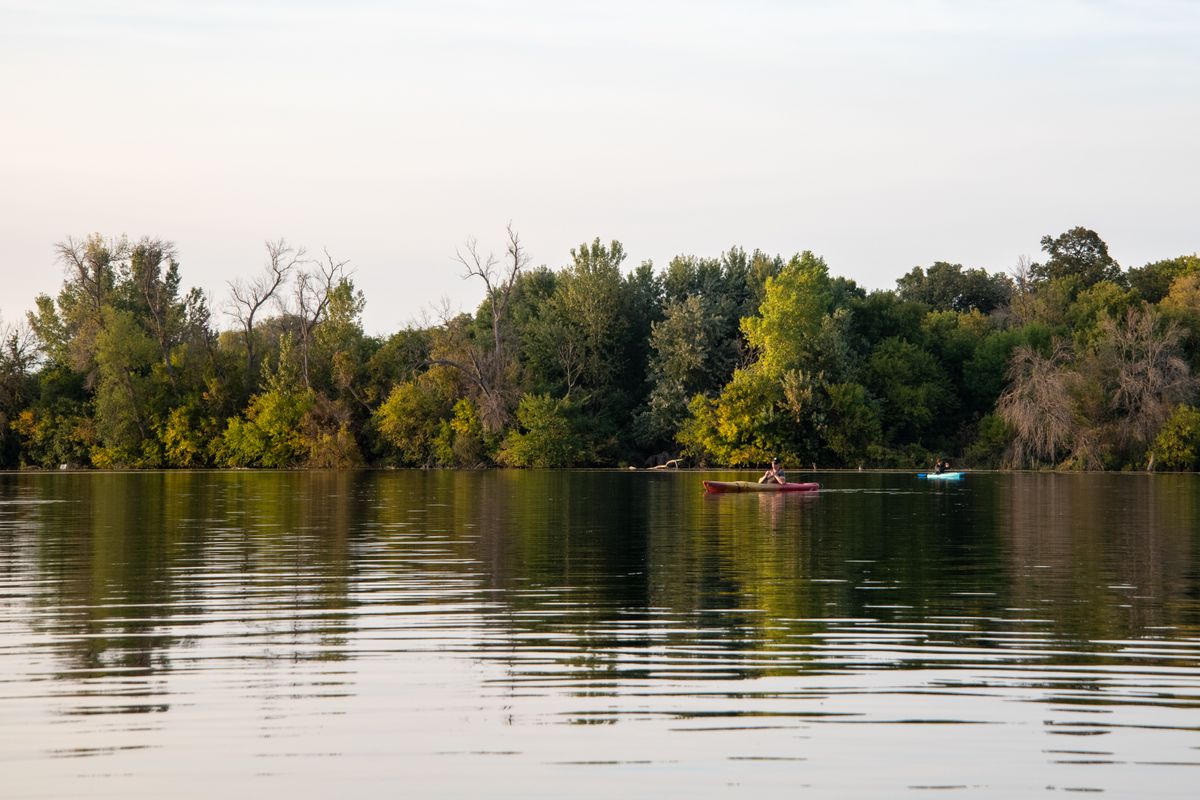
Springfield Township sits in the southeastern corner of Summit County, Ohio, just southeast of Akron and wrapped around spring-fed Springfield Lake. Today it is an unincorporated township of a little over fourteen thousand residents that surrounds the Village of Lakemore and the Sawyerwood community, but its roots reach back more than two centuries to the earliest days of the Connecticut Western Reserve — and for a golden stretch in the early 1900s, its lake made it one of the busiest summer tourist spots in the Akron area.
Founding & the Western Reserve
Like much of northeastern Ohio, the land that became Springfield Township was part of the Connecticut Western Reserve, and it took its name from the Connecticut River Valley city of Springfield, Massachusetts. Settlement began around 1807, and in 1808 the township was formally organized — together with neighboring Tallmadge, Suffield, and Randolph — with its first trustees elected that year. In those early decades the township’s governance shifted with Ohio’s changing map: it was first part of Trumbull County, then Portage County, and finally became part of Summit County when that county was created in 1840.
The First Settlers
Among the township’s earliest settlers was Ariel Bradley, born in Salisbury, Connecticut in 1767, who arrived around 1801. He was joined by pioneers such as Thomas Hale, Ruben Tupper, Nathan Moore, Benjamin Baldwin, and the Hall brothers — John, James, and Robert. According to the township’s own history, these early families were largely Pennsylvania Dutch and English, coming from Pennsylvania and Connecticut. By 1830 the township was home to roughly 1,500 people, farming the rolling land and building the mills and churches that anchored its first communities.
A Township of Villages
Originally spanning about twenty-five square miles, early Springfield Township grew as a cluster of small, distinct communities, each with its own character. Mogadore, in the northeast, became known for its fire clay and brick-making. Ellet grew into a business center and was home to one of the township’s first churches, built in 1809. Thomastown drew Welsh families to its coal mines, while Pleasant Valley was known for mills along the Tuscarawas River. Smaller settlements — Millheim, Britain, and the railroad stop at Krumroy — filled out the map. Over the generations, the City of Akron gradually annexed portions of the township’s northwest, and Mogadore and Lakemore grew into incorporated villages of their own.
When the Township Was a Tourist Town
For a few decades on either side of 1900, Springfield Township was one of the Akron area’s favorite places to spend a summer. Its namesake, Springfield Lake — one of Ohio’s few natural lakes — turned the township into a genuine resort destination in the years before backyard pools, air-conditioning, and the family automobile. City folk escaping the heat and smoke of industrial Akron and Canton came by the thousands to swim, boat, dance, and picnic on its shores.
Getting there was half the fun. The Akron–Canton interurban — the electric trolley line — ran right to the water, with a car stop near Springfield Lake. That put the beach within easy reach of day-trippers from Akron and Canton, and visitors were said to be within about an hour’s travel even from as far away as Louisville. On summer weekends the cars unloaded crowds bound for the lake.
The Wieland Resort
The lake’s best-known attraction was the resort built by Carl Wieland, remembered as “Sawyerwood’s outstanding entrepreneur.” By around 1912–1914, Wieland had fenced off the nicest beach on Springfield Lake and put up a bathhouse with showers, changing rooms, and lockers, renting out towels and bathing suits to visitors who arrived without them. Over the following years his grounds grew into a full lakeside resort — a grocery store, an ice cream parlor, a pool hall, and a dance hall — a one-stop summer playground on the shore. In 1919, Wieland erected a new building that housed an expanded bathhouse and a restaurant opened that year by Wayne Bratten, whose family would remember the lake’s resort days for generations.

Life on the Water
Summer days on Springfield Lake meant boating, canoeing, and swimming from the bathing beaches, and a motor-launch ferry carried passengers from shore to shore — it even ferried a wedding party across the water in 1914. Larger crowds and orchestras rode the lake’s own steamer, the Chautauquan, which had been purchased from the Silver Lake Amusement Park and hauled over to Springfield Lake for excursion outings. And the fun didn’t stop when the weather turned: once the lake froze, visitors returned for ice skating and ice-boating across the ice.
Sawyerwood: A Vacation Village
On the lake’s north shore, Akron mayor W. T. Sawyer developed Sawyerwood as “a vacation village,” lined with small summer cottages where families could settle in for the season. Sawyer marketed it directly to city parents — encouraging them to bring the whole family to the lake, let the children “run wild in the woods,” and learn to swim. Many of those seasonal cottages eventually became the year-round homes of the Sawyerwood neighborhood that still sits in the north-central part of the township today.
Springfield Lake Amusement Park
Across from Sawyerwood, the Springfield Lake Amusement Park opened in 1914 and grew into what was once billed as the largest amusement park in the State of Ohio. Visitors found rides, a pony track, boating, shady picnic groves, and dance pavilions that hosted the big-name bands of the day. The good times came to an abrupt end in 1930: a roller coaster remembered as the “Radio Streak” suffered a brake failure and crashed, injuring 13 people, and the park closed for good.

The End of an Era
The resort era faded through the Great Depression and the rise of the automobile, which let families drive to lakes and attractions much farther from home. The amusement park was gone after 1930, and the grand summer-resort days gradually gave way to the quieter lakeside neighborhoods that ring Springfield Lake today. Yet the echoes remain: the beaches, boat launches, and lakefront parks around the water — and the Sawyerwood cottages-turned-homes — still trace the outline of the days when Springfield Township was a tourist town.
The Springfield Lake Sanatorium & Edwin Shaw
In 1915, the Springfield Lake Sanatorium opened near the lake as a tuberculosis hospital serving Summit County — the reason nearby Sanitarium Road carries its name to this day. In 1934, Summit County commissioners renamed the facility in honor of Edwin C. Shaw (1863–1941), an Akron industrialist who rose to vice president of factory operations at the B.F. Goodrich Company and became one of the city’s leading philanthropists, helping found the Akron Art Museum and the Akron Community Foundation. Over the decades the Edwin Shaw campus evolved from a sanatorium into a rehabilitation hospital; it operated on Sanitarium Road until 2009, when its services moved to a new facility in Cuyahoga Falls.
Schools & the Spartans
Springfield’s original high school was annexed by the City of Akron in 1929, which spurred the township to build new schools of its own. Those roots grew into today’s Springfield Local Schools — the Spartans — which serve Springfield Township and Lakemore from a preschool center through Springfield Junior/Senior High School.
Notable Residents
The Springfield Township area has produced some memorable names. Brothers Art and Walt Arfons, the Akron-area drag racers and land-speed-record chasers famed for their jet-powered “Green Monster” and “Wingfoot Express” machines, are associated with the township, as is the televangelist Ernest Angley, whose Grace Cathedral has long been a local landmark on Canton Road.
A Timeline of Springfield Township
Springfield Township Today
Now covering about fifteen square miles in southeastern Summit County, Springfield Township remains an unincorporated community of roughly 14,000 residents (14,162 at the 2020 census). It borders Tallmadge to the north, Green to the south, Coventry Township to the west, and Akron to the northwest, and it surrounds the Village of Lakemore at its center. Springfield Lake, metro parks and trails, longtime local shops and restaurants, and the Spartan schools continue to give the township the close-knit, lakeside character its founders would still recognize. Explore more of it on our Things To Do, Business Directory, and Places of Worship pages.
Sources
Every fact on this page was drawn from and cross-checked against the following records for Springfield Township in Summit County, Ohio (not to be confused with Ohio’s other Springfield townships or the City of Springfield in Clark County):
- Springfield Township, OH — Official History
- Springfield Township, Summit County, Ohio — Wikipedia
- Springfield Lake — A Bratten Family Living History
- The Springfield Bog Story — University of Akron Community Archaeology Program
- The History of Springfield Lake — Akron-Summit County Public Library
- Springfield Lake — Akron Postcards
- Springfield Lake Sanatorium — Asylum Projects
- Edwin Shaw Hospital Collection — Summit Memory
- Edwin Coupland Shaw — Wikipedia